
Hay Tarp Reinforcement Explained: Hems, Eyelets and Pipe Sleeves
By JEDIRO Team
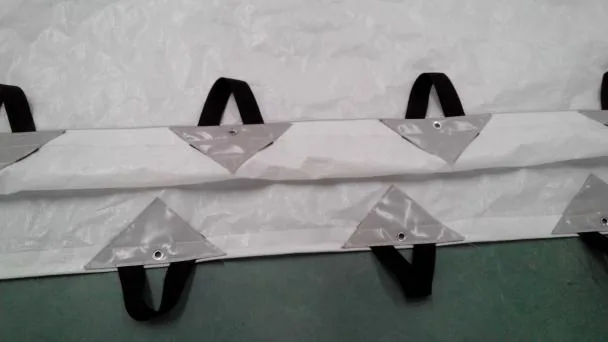
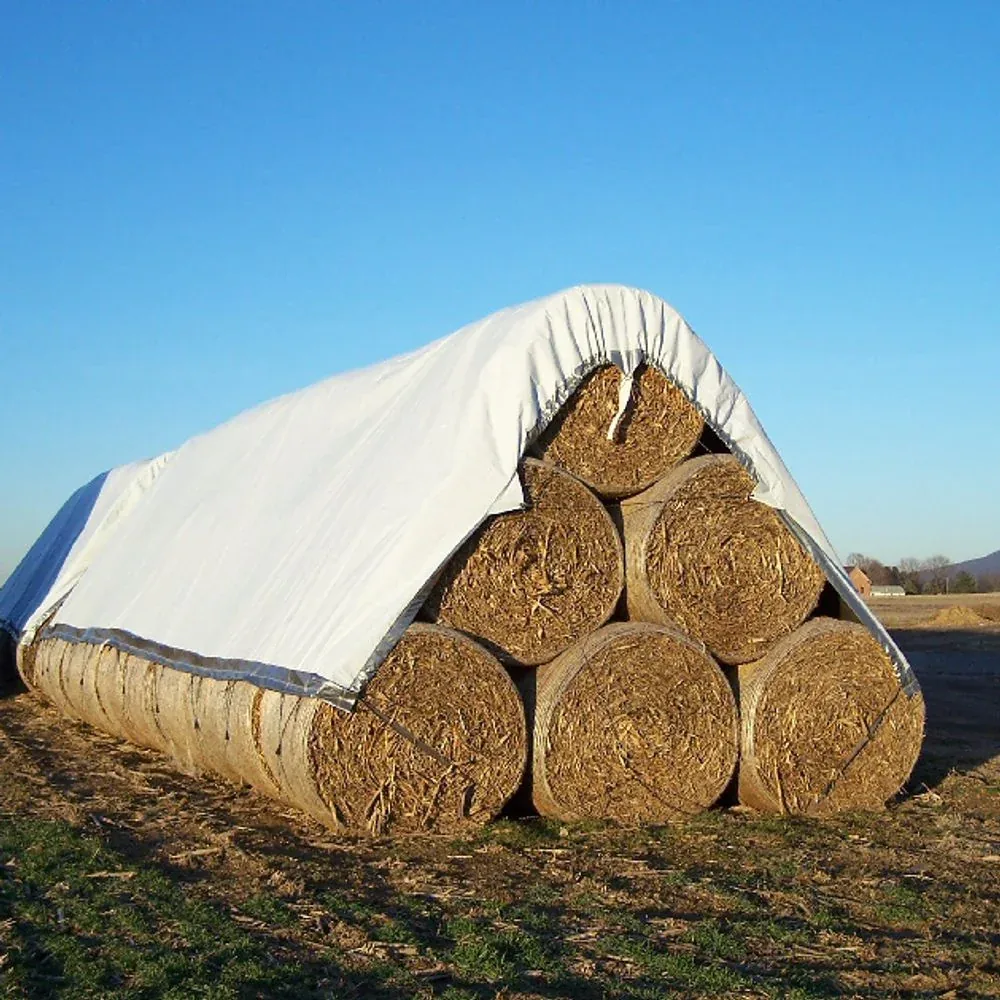
Hay tarp reinforcement describes the construction around the cover's edges and attachment points. A reinforced hem supports the fabric edge, eyelet patches strengthen local fastening areas, webbing loops provide attachment points, and pipe sleeves accommodate a compatible pipe along the edge. When comparing covers, check how these features are made and how they work with the intended fastening system.
JEDIRO's hay tarp specification material describes a polyethylene fabric body with rope-reinforced hems, metal eyelets, local double-layer PVC reinforcement, 2-inch webbing loops and sewn pipe sleeves. The illustrations below explain those terms. Confirm the feature combination, dimensions and included accessories for the model you order.
What a rope-reinforced hem does
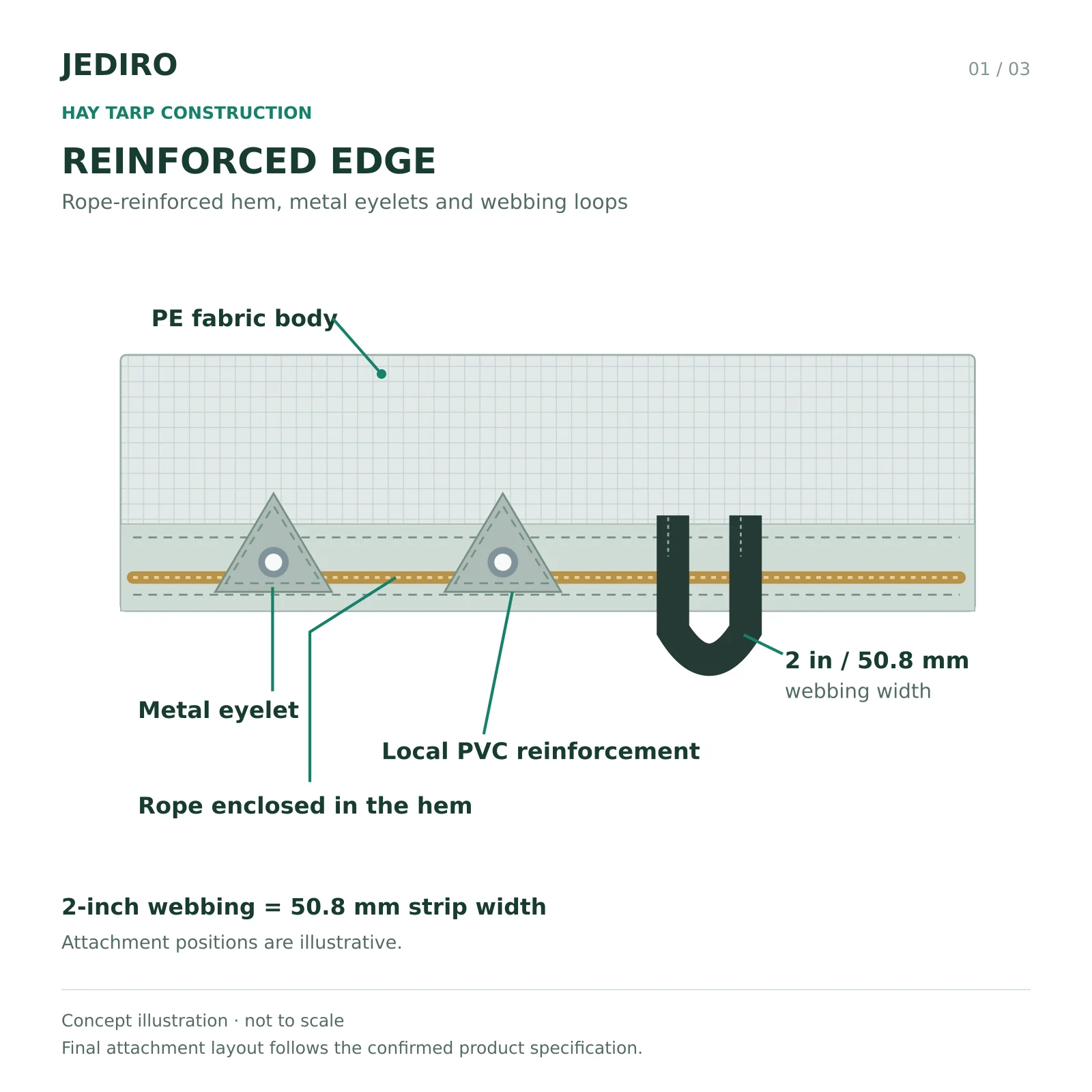
A hem is the finished border of the tarp. In a rope-reinforced hem, the edge encloses a rope that forms part of the border construction. The hem joins the main sheet to the area used for attachments.
The enclosed rope and the loose ropes used to secure the cover have different functions. A specification saying “rope in hem” does not establish that a separate set of fastening ropes is included.
When reviewing a sample, look at the continuity of the hem, its finish and the surrounding fabric. Ask how corners and joins are constructed, and which edges carry the stated reinforcement. The phrase “reinforced edge” alone does not define a complete construction specification.
Eyelets and local reinforcement patches
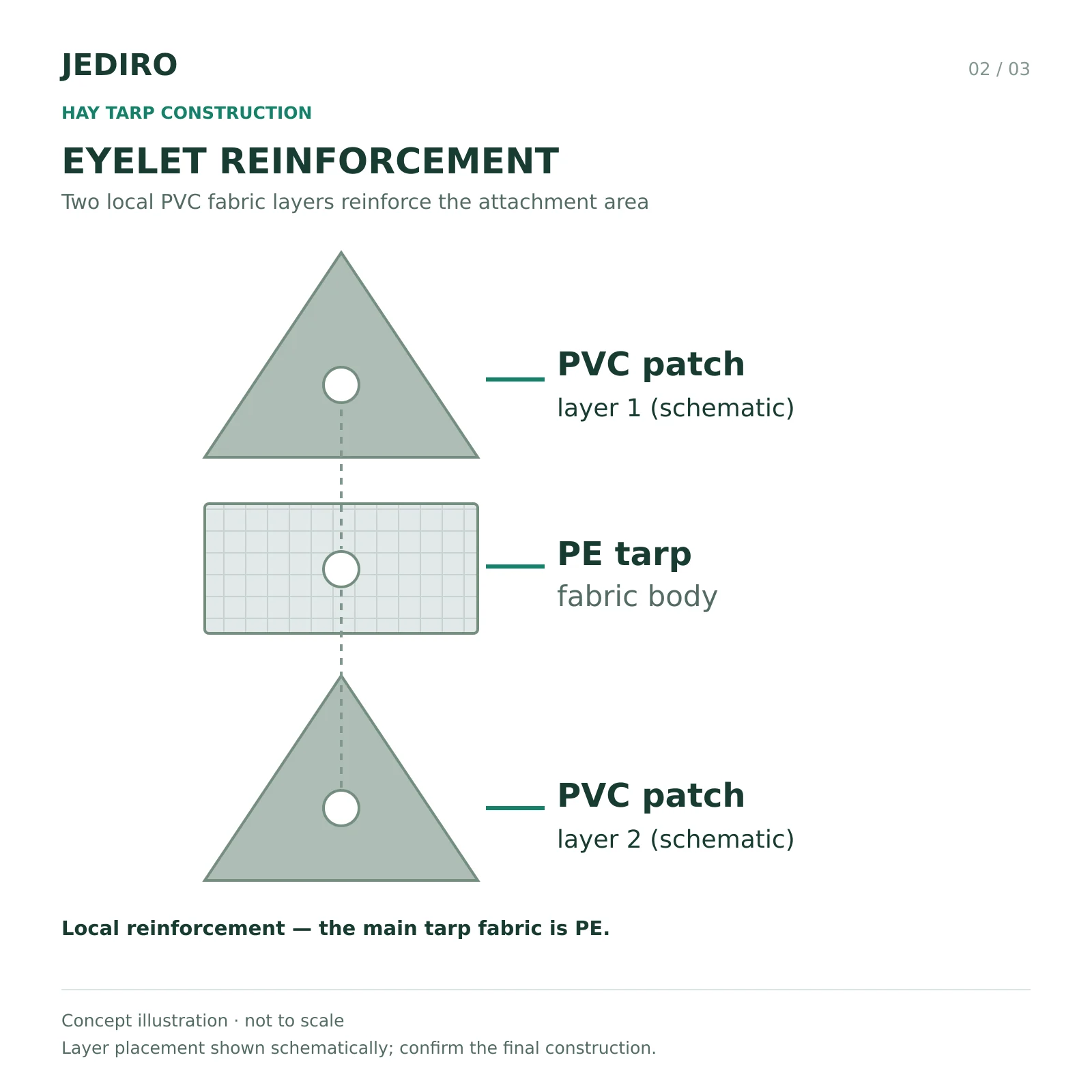
Metal eyelets, also commonly called grommets in tarp listings, provide openings for compatible fastening components. A local patch adds material around the opening where the attachment transfers tension into the cover.
JEDIRO's product material describes two layers of PVC fabric reinforcing the eyelet area. This is local reinforcement: the main tarp body remains polyethylene. It does not mean the entire sheet is made from PVC, and the layer count does not establish a tested attachment strength.
Ask for the eyelet opening, metal specification, spacing and patch details. Include corner positions and the distance from the edge in the layout drawing. These details help you compare two covers that otherwise have the same overall dimensions.
What 2-inch webbing actually measures
A 2-inch webbing specification refers to the width of the strip used to form the loop. Two inches equals 50.8 mm. It does not specify the loop's clear opening, its length or the diameter of a pipe that will fit through it.
A loop also depends on how the strip is attached to the tarp. Confirm the usable opening, loop spacing and attachment construction, then check compatibility with the proposed fastening components. Matching the strip width alone is insufficient to establish that two loop designs have equal strength.
How pipe sleeves support the tarp edge
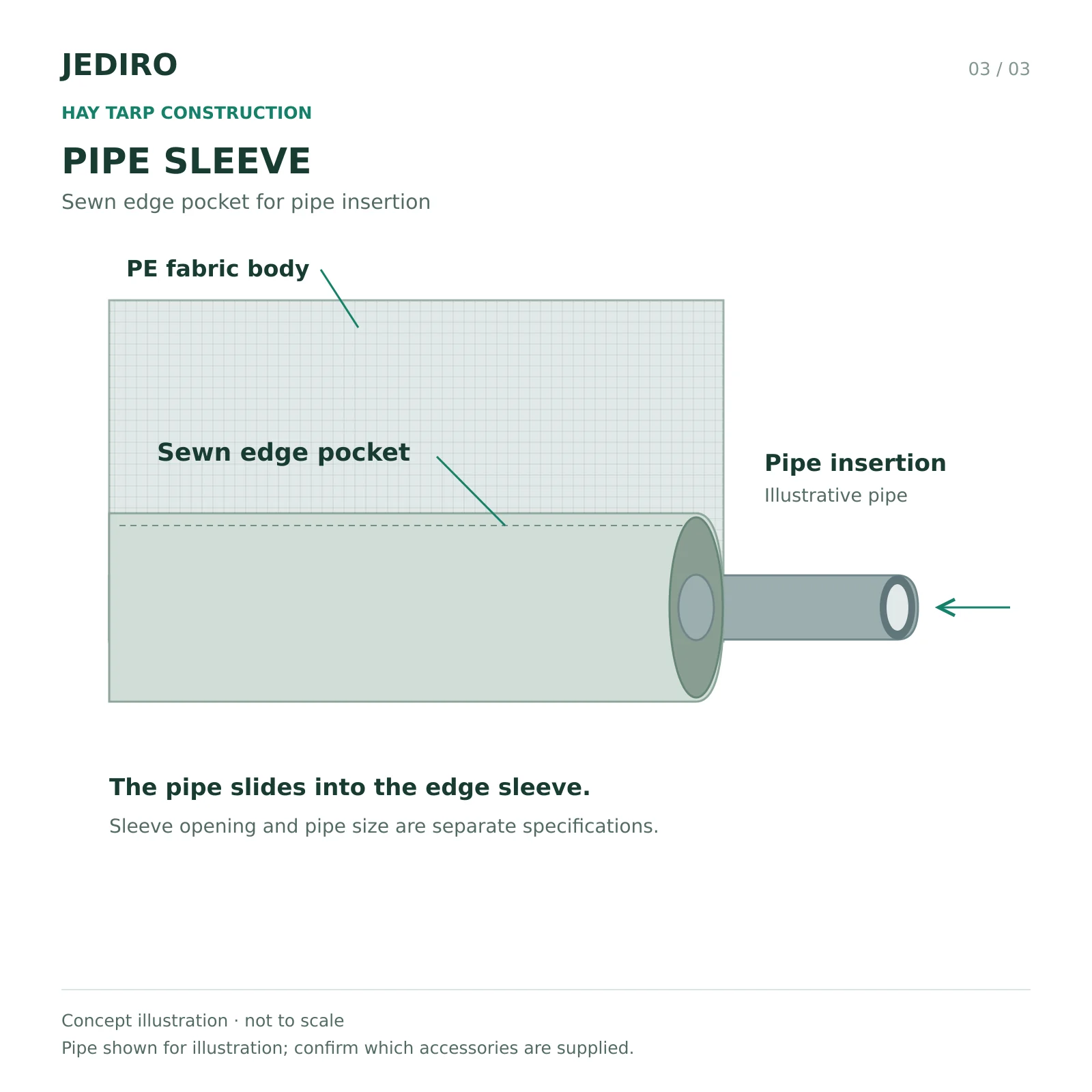
A pipe sleeve is a sewn pocket along the edge into which a suitable pipe can be inserted. In a compatible system, the pipe provides support along that edge. The sleeve, pipe and fastening arrangement need to be specified together.
Ask which sides have sleeves and whether they are continuous or divided into sections. Confirm the usable opening after sewing, the intended pipe outside diameter and any couplings or end fittings that must pass through it.
A sleeve's flat width, its usable opening and the pipe's outside diameter are different measurements. A drawing or sample can resolve ambiguity more reliably than a single unlabelled dimension. Also ask how the sleeve affects the stated finished cover dimensions.
A pipe shown in a diagram is not evidence that pipes are included in the order. Confirm their material, dimensions and supply scope separately. The same applies to ropes, connectors and anchors.
Confirm the complete fastening system before ordering
Use a construction drawing and an itemised quotation to connect the fabric specification with the attachment requirements. The following checklist provides a starting point for a hay tarp enquiry.
Swipe horizontally to view all columns.
| Feature | Details to confirm |
|---|---|
| Finished cover | Overall dimensions, tolerance and orientation on the stack |
| Hem | Rope reinforcement, border construction and applicable edges |
| Eyelets | Clear opening, metal specification, spacing and corner positions |
| Local patches | Material, layer count, extent and assembly around the eyelet |
| Webbing loops | Strip width, usable opening, spacing and attachment construction |
| Pipe sleeves | Applicable sides, usable opening, section lengths and intended pipe size |
| Accessories | Included and excluded pipes, ropes, connectors and anchors |
| Verification | Approved drawing, sample checks and any agreed test requirements |
These are fields to agree for your order, rather than a list of accessories included with every JEDIRO cover. If a quotation states an attachment strength, request the test method and conditions used to obtain it. A visual inspection can verify visible workmanship but cannot establish a standardised strength rating.
For the wider purchasing brief, pair this construction checklist with the hay tarp fabric-weight guide and the hay tarp size guide.
What to inspect after installation
Follow the instructions for the actual cover and fastening system. From a safe position, inspect for slack fabric, persistent flapping, water pooling, abrasion and changes at attachment points. Look for distorted eyelets, damaged patches, opening seams or fraying webbing.
Recheck the cover after the stack shape changes or after strong weather. If an attachment is damaged, assess it with the supplier or installer before adding more tension. Reinforcement does not create a universal wind rating, and a stronger attachment cannot compensate for an unsuitable anchor or an incompatible installation.
Frequently asked questions
What do reinforced eyelets do?
They provide a local fastening opening with added material around the attachment area. Their performance depends on the eyelet, patch, hem and fastening arrangement together. Reinforcement does not guarantee that an eyelet can never pull out.
Does 2-inch webbing mean a 2-inch opening?
It means the strip is nominally 2 inches, or 50.8 mm, wide. Ask separately for the loop's usable opening and compatibility with your fastening components.
Are pipes supplied with a hay tarp?
Check the quotation. A pipe sleeve describes a construction feature; it does not establish that a pipe or a complete fastening kit is supplied.
Send JEDIRO your required cover size, quantity, destination and proposed fastening arrangement. Ask us to confirm the hem design, attachment layout, pipe sleeve opening and included accessories for your order.
View JEDIRO hay tarp options or contact JEDIRO with your drawing or specification checklist.
Frequently Asked Questions
Featured Product
Confirm Your Hay Tarp Construction
Share your required cover size, quantity, destination and fastening arrangement so JEDIRO can discuss the hem design, attachment layout, pipe sleeve opening and supply scope for your order.
Related Articles


Share this article
JEDIRO Team
We manufacture bale net wrap, silage wrap film, and cotton wrap film for global agricultural markets. Learn more about us →