
How Many Cotton Modules Does One Roll of Cotton Wrap Film Cover?
By JEDIRO Team
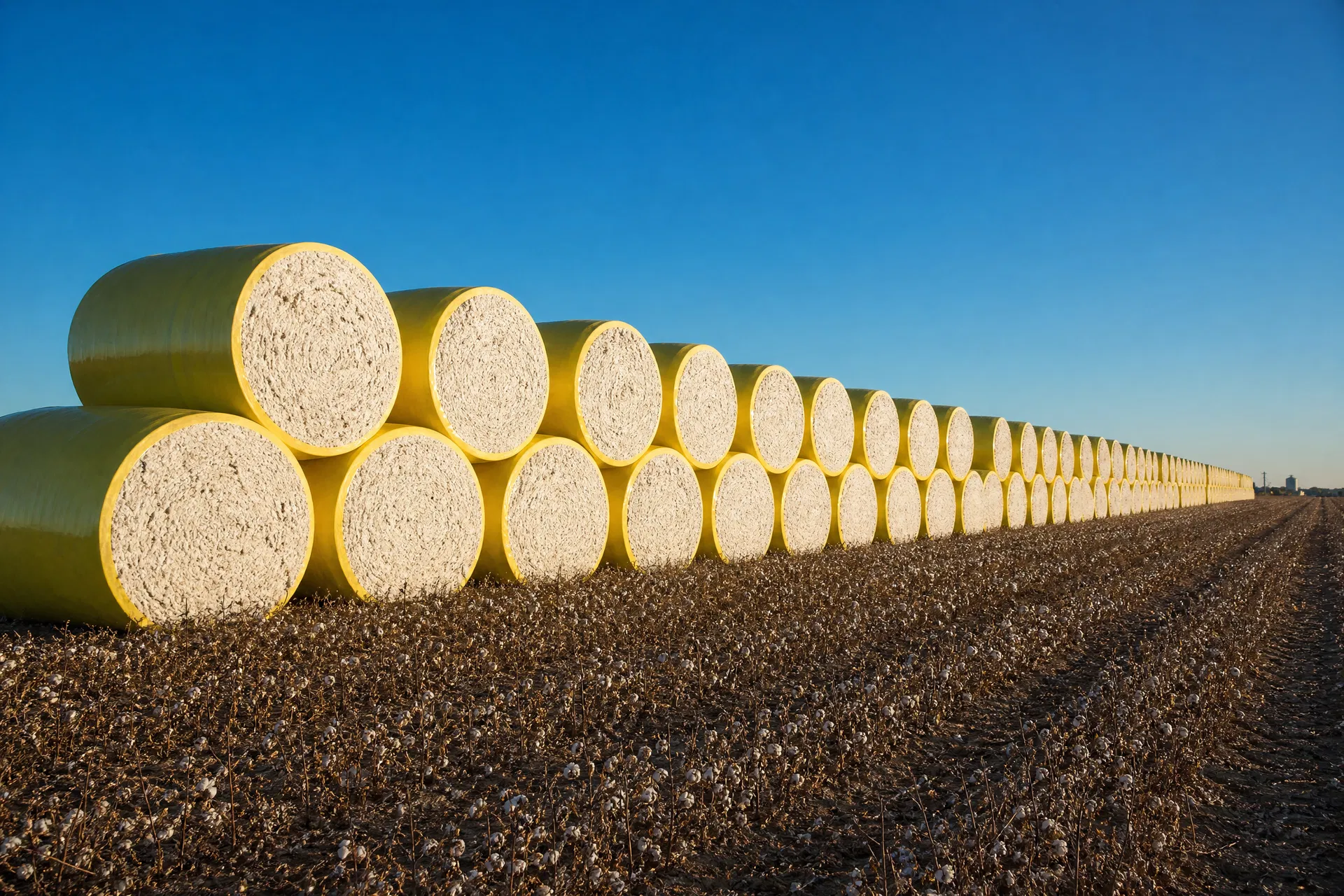
If you are budgeting film for a harvest season — or sizing a container order from an overseas supplier — the single most useful number is not the roll length. It is how many finished modules that roll actually produces.
For a standard 108-inch round module wrap roll, the answer is 24 modules per roll. Everything else in your planning follows from that number.
The core math
A standard cotton wrap film roll is built to a fixed geometry:
| Roll specification | Value |
|---|---|
| Width | 2.743 m (108 in) |
| Length per roll | 504 m |
| Individual sheet length | 21 m (9 m + 12 m) |
| Modules per roll | 504 ÷ 21 = 24 |
| Net roll weight | 100 kg |
| Core inner diameter | 25 cm |
The 21 m sheet length is not arbitrary. A round cotton module ejected from a John Deere CP690, CS690 or CP770 is approximately 2.4 m in diameter, giving a circumference of about 7.5 m. A 21 m sheet therefore wraps the module roughly 2.8 times — enough to build the overlapping multi-layer zones that give the module both weather protection and structural rigidity, with sufficient tail length remaining for the adhesive seal.
The 2.743 m width is matched to the same geometry from the other direction. The module face is about 2.4 m across, so roughly 17 cm of film on each side folds over the flat ends of the module to form the shoulder. That shoulder is where most field damage starts, which is why width tolerance on cotton wrap film matters more than buyers usually assume — a roll running 2 cm narrow leaves the module edges exposed, and a roll running wide tears against the wrapper during application.
From modules to bales to acres
Twenty-four modules per roll is the fixed number. Converting that into acres depends on your yield, so treat the figures below as a planning baseline and adjust to your own gin turnout records.
A round module typically holds around 4,800–5,000 lb of seed cotton. At a lint turnout of roughly 38–42%, that produces about 4 to 4.5 bales of 480 lb lint per module.
| Per roll | Result |
|---|---|
| Modules | 24 |
| Seed cotton | ~52–54 tons |
| Lint bales (480 lb) | ~100 |
Now convert to acreage:
| Yield (bales/acre) | Acres covered per roll | Rolls per 100 acres |
|---|---|---|
| 1.0 (dryland) | ~100 | 1.0 |
| 1.5 | ~67 | 1.5 |
| 2.0 | ~50 | 2.0 |
| 2.5 | ~40 | 2.5 |
| 3.0 | ~33 | 3.0 |
| 3.5 (high-yield irrigated) | ~29 | 3.5 |
A convenient rule of thumb falls out of this: at typical irrigated yields of 2–3 bales per acre, one roll covers 33–50 acres, and a 1,000-acre cotton operation needs roughly 20–30 rolls per season.
Container-level planning
For importers and dealers, the same math scales up cleanly:
| Container | Rolls | Modules | Approx. lint bales |
|---|---|---|---|
| 20 ft | 126 | 3,024 | ~12,700 |
| 40 ft | 216 | 5,184 | ~21,700 |
One 40 ft container of cotton wrap film covers roughly 2,500 acres at 2 bales/acre. If you are a distributor sizing a season's inventory, work backwards from the acreage in your territory rather than from a rolls figure your supplier suggests.
Why real-world usage runs slightly above 24
The 24-module figure is the design number. In practice, most operations consume marginally more film per module for reasons worth planning around:
Module diameter setpoint. Running the harvester at its maximum diameter setpoint produces the largest module the film was designed for. Running smaller does not save film — the sheet length is fixed, so a smaller module simply gets more overlap. Running at maximum yield per sheet is the only lever, and it is set on the machine, not the roll.
Wrap failures and restarts. A misfeed, a tail that fails to seal, or a torn sheet consumes a full sheet with no module to show for it. On a well-maintained machine this is rare; on a machine with worn wrap rollers or incorrect brake tension it can run to several percent.
Partial rolls at season end. A roll that is 60% consumed when harvest finishes is usually not worth carrying over if it has been sitting in a machine exposed to sun and moisture.
Damaged modules requiring rewrap. A module dropped or torn during handling may need a manual patch or full recover.
A practical ordering buffer is 3–5% above calculated need. On a 30-roll season that is one extra roll — far cheaper than running out mid-harvest and paying spot pricing or, worse, leaving modules unwrapped.
What to verify before you order
Modules-per-roll only holds if the roll actually meets its stated specification. Before committing to a container, confirm:
- Length per roll is verified, not nominal. Short rolls are the most common quality shortfall in imported ag film, and a 490 m roll delivers 23 modules, not 24. Ask whether roll length is checked in-line or only at setup.
- Sheet length tolerance. The 9 m + 12 m sheet division needs to be consistent, or the wrapper cuts at the wrong point.
- Net weight matches the length and thickness claim. For a 2.743 m × 504 m roll, net film weight and stated thickness should reconcile against LLDPE density. If they do not, one of the two numbers is wrong.
- Adhesive formulation matches your climate. High-ambient and low-ambient adhesive formulations behave differently; a high-ambient tail adhesive applied in a cold Texas Panhandle harvest will slip.
Full specifications, including tensile, tear resistance, UV rating and harvester compatibility, are published on the JEDIRO cotton wrap film product page.
Frequently Asked Questions
Featured Product
JEDIRO Cotton Wrap Film
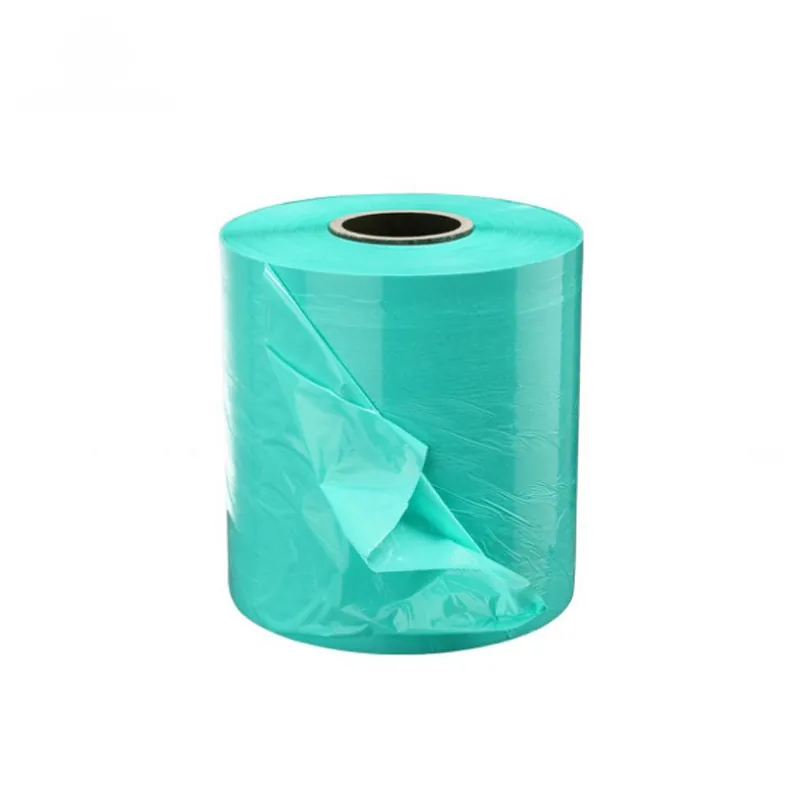
108-inch (2.743m) width · 504m per roll · 24 modules per roll · 5-layer LLDPE co-extrusion · Yellow and blue available for US gin delivery.
Related Articles


Share this article
JEDIRO Team
We manufacture bale net wrap, silage wrap film, and cotton wrap film for global agricultural markets. Learn more about us →