
China Silage Film Industry Overview: Production Hubs, Export Trends, and Quality Tiers
By JEDIRO Team

China has emerged as the dominant global manufacturer and exporter of silage wrap film over the past decade, driven by massive investment in blown film extrusion capacity, competitive raw material supply chains, and efficient port logistics. For international buyers — agricultural distributors, cooperatives, and farm supply retailers — understanding the structure of China's silage film industry is essential for making informed sourcing decisions. This article provides an overview of the industry's geography, technology tiers, export dynamics, and quality landscape.
Industry Scale and Global Position
The global silage film market was valued at approximately USD 2.1 billion in 2024 and is projected to reach USD 3.4 billion by 2034, growing at a compound annual growth rate (CAGR) of 4.8%. China accounts for over 60% of global silage film exports by volume, making it the single most important supply source for international buyers. This dominance is relatively recent — as recently as 2010, European manufacturers (particularly in Germany, Finland, and Ireland) held the majority of global market share. China's rise has been driven by rapid capacity expansion, competitive pricing, and steady improvement in product quality at the premium tier.
The growth drivers for global silage film demand include: increasing mechanization of livestock farming in developing regions, growing adoption of round bale silage systems (replacing pit/bunker silage), rising awareness of feed quality preservation, and expansion of dairy and beef production in Asia-Pacific, South America, and Central Asia. China is positioned to capture the majority of this incremental demand due to its cost structure and available capacity.
Production Geography: Shandong and Hebei
Chinese silage film production is geographically concentrated, with Shandong Province accounting for an estimated 65–70% of national output and Hebei Province contributing approximately 15–20%. The remaining production is scattered across Jiangsu, Guangdong, and other provinces.
Shandong Province — The Core Hub
Within Shandong, three cities form the core of silage film manufacturing:
Qingdao — Home to the largest concentration of export-oriented silage film manufacturers. Qingdao's advantage is dual: it hosts major blown film extrusion operations and it is one of China's top-five container ports, minimizing inland logistics costs. Most premium-tier manufacturers serving European and Australian markets are based in or near Qingdao.
Weifang — A secondary manufacturing center approximately 200 km east of Qingdao, with a cluster of mid-tier manufacturers. Weifang-based producers typically serve Central Asian and Middle Eastern markets where price sensitivity is higher and UV requirements are less demanding than European markets.
Zibo — Known for its petrochemical industry base, Zibo hosts several silage film manufacturers that benefit from proximity to domestic LLDPE resin production. Zibo-based manufacturers tend to focus on standard-tier product using domestic resin.
Hebei Province — The Secondary Hub
Hebei's silage film manufacturers are concentrated around Shijiazhuang and Baoding. These factories primarily serve the domestic Chinese market (China has a growing dairy industry that uses silage film) and price-sensitive export markets. Hebei manufacturers are generally positioned in the standard to economy tier, with fewer 5-layer lines than Shandong-based competitors.
The Three Quality Tiers
China's silage film industry is not monolithic. It operates across three distinct quality tiers, each serving different market segments with different technology, materials, and pricing. Understanding these tiers is the most important framework for international buyers evaluating Chinese suppliers.
Premium Tier (Tier 1): 5-Layer Blown Co-Extrusion
Premium manufacturers operate 5-layer blown film co-extrusion lines — typically from European equipment makers (Reifenhäuser, Windmöller & Hölscher) or high-end Chinese equivalents (Jinming, Guangdong Jinlai). They use imported metallocene LLDPE (mLLDPE) resin from ExxonMobil, Dow, or SABIC as the primary material.
The resulting film delivers: 18+ months of UV protection, high oxygen barrier for optimal fermentation, consistent single-side tack, elongation at break exceeding 400%, and excellent puncture resistance. This tier competes directly with European-made silage film (from manufacturers like Silawrap, Berry BPI, and Trioplast) at a 20–35% price discount.
Premium-tier manufacturers typically have ISO 9001 certification, documented QC processes, export experience to demanding markets (Europe, Australia, North America), and the ability to provide independent lab test reports. They accept third-party pre-shipment inspection and maintain consistent production quality across orders.
Standard Tier (Tier 2): 3-Layer Blown Co-Extrusion
Standard-tier manufacturers operate 3-layer blown film lines using domestic virgin LLDPE from Sinopec or PetroChina. The 3-layer architecture requires combining functions into fewer layers, which means trade-offs — typically in oxygen barrier consistency and long-term UV performance.
Standard-tier film delivers: 12–15 months of UV protection, adequate oxygen barrier for most silage applications, functional tack performance, and elongation at break of 300–400%. This tier serves markets where the storage period is shorter (under 12 months), UV exposure is less intense, or price is the primary decision factor.
Standard-tier manufacturers may have ISO 9001 but are less likely to provide independent lab reports or accept third-party inspection. Quality consistency between orders can be more variable than premium tier.
Economy Tier (Tier 3): Cast or Basic Blown
Economy-tier manufacturers use cast extrusion or basic single/dual-layer blown film lines. They may blend recycled polyethylene into the formulation to reduce material costs. The resulting film has: 6–9 months of UV life (sometimes less), inconsistent oxygen barrier, variable tack, and lower mechanical strength.
This tier primarily serves the domestic Chinese market and extremely price-sensitive export markets where silage film is used for short-term storage only. International buyers targeting quality-conscious end users should avoid this tier entirely — the cost savings are not worth the performance risk and potential customer complaints.
Raw Material Supply Chain
The raw material landscape for Chinese silage film manufacturers has evolved significantly. Premium manufacturers now have reliable access to the same resin grades used by European film producers, eliminating what was historically a quality disadvantage.
Imported Resins (Premium Tier)
ExxonMobil's Exceed and Enable mLLDPE series, Dow's Elite and Affinity series, and SABIC's Cohere series are all readily available in China through established distribution channels. These resins provide superior stretch, tack, and UV stability compared to conventional LLDPE. Import logistics from Middle Eastern and Southeast Asian petrochemical plants to Chinese ports are well-established, with typical lead times of 2–4 weeks.
Domestic Resins (Standard Tier)
Sinopec and PetroChina produce large volumes of conventional LLDPE suitable for agricultural film applications. These resins are adequate for standard-tier silage film but lack the enhanced properties (particularly tack and stretch recovery) of metallocene grades. Domestic resin pricing is typically 10–20% lower than imported mLLDPE, which drives the cost difference between tiers.
Recycled Content (Economy Tier)
Some economy-tier manufacturers incorporate post-industrial or post-consumer recycled PE into their formulations. While this reduces material cost, it introduces variability in mechanical properties, degrades UV stability (recycled PE has already undergone partial degradation), and can create inconsistent tack. Reputable manufacturers at the premium and standard tiers do not use recycled content in silage film — if a supplier claims 100% virgin material, ask for a material declaration to verify.
Export Trends and Destination Markets
China's silage film exports have grown at approximately 8–12% annually over the past five years, outpacing global market growth. The primary export destinations, in approximate order of volume, are:
Europe — The largest single export market for Chinese silage film, driven by price-competitive premium-tier product that meets European performance expectations. Key importing countries include Germany, France, UK, Ireland, Poland, and the Nordic countries. European buyers typically demand 5-layer film with 18-month UV certification and independent test data.
Australia and New Zealand — High-value markets with demanding UV requirements (due to intense southern hemisphere UV exposure). Premium-tier Chinese manufacturers have gained significant share in Australasia by offering film with verified UV performance at lower cost than traditional European suppliers.
North America — A growing market for Chinese silage film, particularly in Canada and the northern US states where round bale silage is expanding. North American buyers are increasingly comfortable sourcing from China as premium-tier quality has become well-established.
Central Asia — Kazakhstan, Uzbekistan, and neighboring countries represent a fast-growing market as dairy farming modernizes. These markets are primarily served by standard-tier Chinese manufacturers due to shorter storage periods and moderate UV exposure.
South America — Brazil, Argentina, and Chile are emerging markets for Chinese silage film, driven by expanding dairy and beef production. A mix of premium and standard-tier product serves this region.
Industry Trends and Outlook
Consolidation at the Premium Tier
The Chinese silage film industry is undergoing gradual consolidation at the premium tier. Larger manufacturers are investing in additional 5-layer lines, expanding capacity, and building brand recognition in export markets. Smaller economy-tier operators face margin pressure from rising resin costs and increasing quality expectations from international buyers. Over the next 3–5 years, expect the number of premium-tier exporters to remain stable while economy-tier operators either upgrade or exit the market.
Sustainability and Bio-Based Materials
The European bio-based silage film market is projected to grow at a CAGR of 14.5% from 2026 to 2033, driven by EU sustainability regulations and farmer demand for recyclable or compostable alternatives. Chinese manufacturers at the premium tier are beginning to invest in bio-based PE and biodegradable film research, though commercial-scale production remains limited. This is a space to watch for buyers with sustainability mandates.
Capacity Expansion
Several major Chinese manufacturers have announced capacity expansion plans for 2026–2028, adding new 5-layer lines to meet growing export demand. This additional capacity should maintain competitive pricing while improving availability and reducing lead times for international buyers.
Implications for International Buyers
Understanding China's silage film industry structure leads to several practical implications for sourcing decisions:
Match your tier to your market. If you serve quality-conscious European or Australian end users, source exclusively from premium-tier manufacturers. The 20–35% cost saving versus European product is your margin opportunity — do not erode it by downgrading to standard tier and risking customer complaints.
Verify, do not assume. A Shandong address does not guarantee premium quality. Use the supplier evaluation framework to verify each manufacturer's actual tier through equipment, resin, and test data verification. Our 5-layer vs 3-layer comparison explains the technical differences in detail, and the thickness guide helps match film specifications to application requirements.
Build relationships, not just transactions. Premium-tier Chinese manufacturers increasingly value long-term partnerships over one-off orders. Consistent volume commitments can unlock better pricing, priority production scheduling, and customization options (private label, custom dimensions, branded packaging).
JEDIRO operates at the premium tier of China's silage film industry, producing 5-layer blown co-extrusion silage wrap film from our Shandong production facility. We use imported mLLDPE resin, provide pre-shipment inspection on every container, and ship from Qingdao and Shanghai ports to global markets. For buyers evaluating Chinese silage film suppliers, we welcome direct comparison — request samples, test reports, and factory information to verify our position in the market.
Frequently Asked Questions
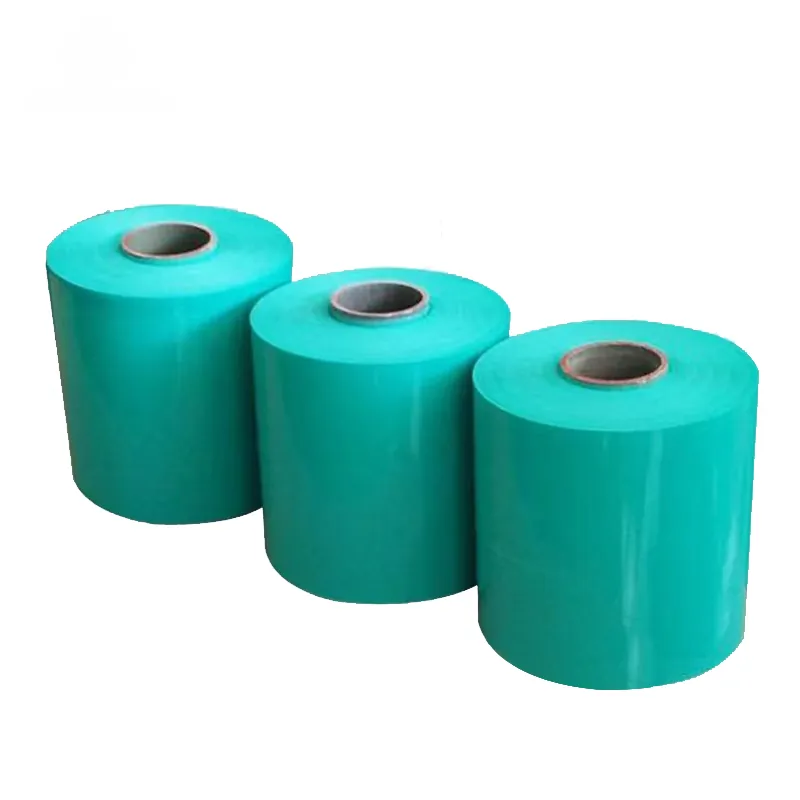
Featured Product
JEDIRO — Premium Tier Silage Film, Factory Direct from Shandong
5-layer blown co-extrusion, 100% virgin LLDPE, 18-month UV protection. Shipping from Qingdao and Shanghai to global markets. Pre-shipment inspection on every container.
Related Articles


Share this article
JEDIRO Team
We manufacture bale net wrap, silage wrap film, and cotton wrap film for global agricultural markets. Learn more about us →