
6 oz vs 7 oz vs 8 oz Hay Tarps: How to Read Fabric Weight
By JEDIRO Team
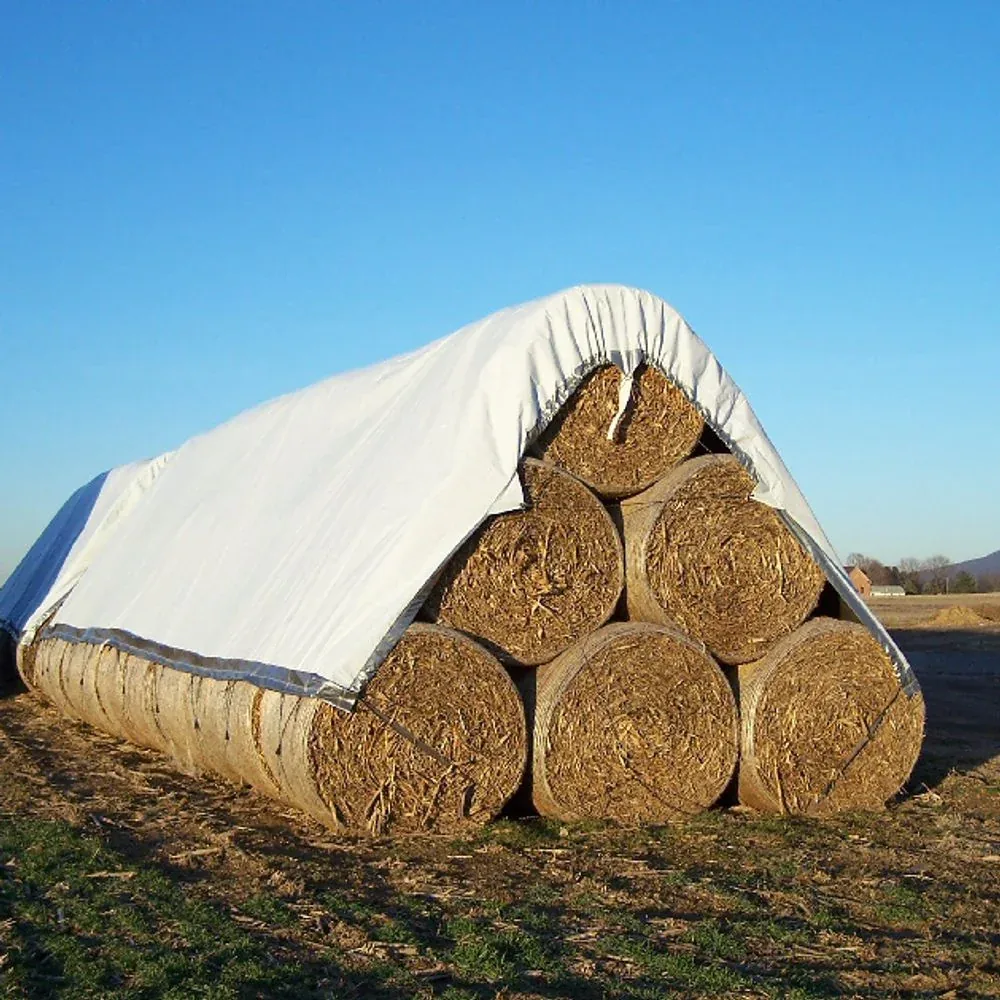
When hay tarp fabric weight is specified in ounces per square yard, 6 oz, 7 oz and 8 oz correspond to approximately 203, 237 and 271 grams per square metre. These values describe how much the fabric weighs over a given area. They do not specify the tarp's thickness or the weight of the complete cover.
For a buyer comparing quotations, the first step is to confirm the full unit and what the supplier has weighed. Once that basis is clear, fabric weight becomes a useful part of the comparison alongside finished size, reinforcement and the intended storage conditions.
What oz means on a hay tarp specification
The full fabric-weight unit is usually written as oz/yd², meaning ounces per square yard. A listing may shorten this to “8 oz”, leaving the area unit unstated. Ask the supplier to confirm the denominator rather than assuming that all quotations use the same basis.
A square yard measures 3 ft by 3 ft. At 8 oz/yd², that area of fabric has a nominal mass of 8 ounces, or about 227 grams. That is different from the weight of one square metre, which covers a larger area.
Also confirm whether the figure refers to the woven base fabric or the finished coated or laminated fabric. A value that includes the surface layers cannot be compared directly with a base-fabric value.
Converting 6 oz, 7 oz and 8 oz to gsm
The abbreviation gsm means grams per square metre and is equivalent to g/m². Using standard mass and area conversions, 1 oz/yd² is approximately 33.906 g/m².
| Nominal fabric weight | Calculated equivalent | Rounded equivalent |
|---|---|---|
| 6 oz/yd² | 203.43 g/m² | Approximately 203 gsm |
| 7 oz/yd² | 237.34 g/m² | Approximately 237 gsm |
| 8 oz/yd² | 271.25 g/m² | Approximately 271 gsm |
To convert an oz/yd² value to gsm, multiply it by approximately 33.906. To convert gsm to oz/yd², divide by the same factor. The calculation uses the standard unit relationships described in NIST's conversion guidance.
The table converts nominal values. It does not establish a manufacturing tolerance or replace a measurement of supplied fabric. If your purchase specification requires a minimum weight, state the acceptance requirement separately.
Fabric weight, thickness and finished tarp weight
Fabric weight measures mass per unit area. Thickness measures the distance between the material's surfaces. Finished tarp weight measures the mass of the complete manufactured cover.
There is no universal conversion from 8 oz fabric to a particular thickness in mils or microns. Material composition, weave and surface layers affect the relationship. Request thickness as a separate specification when it matters to your order.
The finished cover may also contain folded hems, local reinforcement patches, webbing, ropes and metal eyelets. Their weight must be accounted for when estimating handling or shipping requirements. Pipes and separate fastening accessories need their own stated supply scope.
A worked example using a 30 ft × 48 ft panel
A flat rectangular panel measuring 30 ft × 48 ft has an area of 160 square yards. At a nominal 8 oz/yd², the panel's calculated mass is 1,280 ounces, equivalent to 80 pounds or approximately 36.3 kg.
This is an illustration of the fabric-area calculation, not a stated JEDIRO finished-product weight. If 30 ft × 48 ft describes the finished cover after hemming, additional fabric may be used in the folds and sleeves. Reinforcement, fittings and packaging must also be considered.
For a freight quotation, obtain the measured unit weight and packed gross weight instead of relying on this estimate.
Comparing the three fabric weights
On the same measurement basis, 8 oz/yd² contains one-third more mass per unit area than 6 oz/yd². The 7 oz option sits between them. This is a material-weight comparison; it is not proof of a corresponding increase in tear strength or service life.
For a large cover, a higher fabric weight also raises the calculated panel mass, which may affect handling. Whether the additional material suits your application depends on the rest of the construction and the demands of the installation.
Compare the actual fabric and edge details. Eyelet reinforcement, webbing attachment, seams and pipe sleeves determine where tension enters the cover. UV treatment and water-resistance information should be specified separately. A fabric-weight label alone cannot establish how many seasons a tarp will last or what wind conditions it can withstand.
"A fabric-weight label is useful only when the unit, measurement basis, finished dimensions, and construction details are all confirmed."
Five questions to ask before comparing quotations
Use the same specification for each supplier so that differences in price can be assessed against differences in the product.
| Question | What to confirm |
|---|---|
| What is the complete weight unit? | Ask for oz/yd² or g/m², rather than an isolated oz value. |
| What material is included in that weight? | Identify base fabric or finished coated or laminated fabric. |
| What dimensions will be supplied? | Confirm cut size or finished size, including the agreed tolerance. |
| How will conformity be checked? | Agree on weight tolerance, sampling and any required test documents. |
| What does the complete supply include? | Specify hems, reinforcement, fittings, accessories and packing weights. |
If a report is supplied, check which sample and property it covers. A fabric-weight measurement does not also verify tear strength, UV durability or the entire finished cover.
For the edge and attachment details that should accompany a fabric-weight comparison, read the hay tarp reinforcement guide.
Frequently asked questions
Does 8 oz mean the tarp is 8 mil thick?
No. Oz/yd² measures fabric mass per unit area, while mil measures thickness. Ask for both values separately if both are required.
Is 271 gsm the same as 8 oz fabric?
Approximately, when “8 oz” means 8 oz per square yard. Confirm the full unit and whether the weight includes the surface layers.
Can a larger tarp weigh more even with the same fabric weight?
Yes. A larger area uses more fabric. Edge construction and accessories also affect the finished weight.
Is 8 oz always the best option?
Choose against the complete specification and application. The weight label alone does not establish strength, handling suitability or expected service life.
JEDIRO's PE hay tarp range lists 6 oz, 7 oz and 8 oz fabric options. When requesting a quotation, ask us to confirm the full weight unit, measurement basis and finished dimensions for your order.
Send your required size, preferred fabric weight, quantity and destination. If you have requirements for reinforced eyelets, webbing loops or pipe sleeves, include those details so we can confirm the construction and accessory scope. Contact JEDIRO for a hay tarp quotation.
Frequently Asked Questions
Featured Product
Discuss Your Hay Tarp Specification
Share your required size, preferred fabric weight, quantity, and destination so JEDIRO can confirm the measurement basis and cover specification for your quotation.
Related Articles
Share this article
JEDIRO Team
We manufacture bale net wrap, silage wrap film, and cotton wrap film for global agricultural markets. Learn more about us →